
#4 Manual focus and its impact on capturing fleeting moments
Hey! It’s been a minute. I’ve had the general idea for this blog post for a while but life has gotten in the way of actually doing it. An exciting thing coming up in my life is a big trip around Europe at the end of the year! I’ve been booking and planning things and it’s becoming more real now. I’m most excited to see the Northern Lights, hang out with reindeer AND do photography along the way! I’ll talk more about it all as time goes on.
Today I want to talk about a photography technique (style?) and how it impacts my art.
Cameras these days pretty much all have an auto-focus (AF) option which, put simply, works exactly how you’d expect- the camera is doing the bulk of the work (related to focus) and choosing what area should be in focus and automatically making adjustments internally in the lens.
There are different types of AF and some camera manufacturers have faster, smarter, generally better AF features than others. Using auto focus can make things easier for the photographer: to have one less thing to think about especially in moments where there’s truly a split second to get the shot. Consider for example photographing race cars. The cars are moving at extreme speeds and the photographer is stationary, a good AF system is able to track the car as the photographer also pans to track the car.
When I made the switch over to the Fujifilm system, one of the main reasons was the fact that those camera lenses and bodies lend themselves to a very tactile experience. With buttons and dials, I can affect change on the three points of the exposure triangle (we’ll talk about that in the future). When my camera is set to manual focus (MF), the AF feature is turned off/overridden and I can control the focus (the focal plane) by rotating a ring on the lens- very tactile. I enjoy the added challenge of being required to find focus myself and it allows me full creative freedom to pick and choose which elements of the image I want sharp, in focus and those I want melting away into bokeh. I’m left with images that truly feel personal, like I created this piece of art myself; that each image’s focus is where I put it because I was more actively engaged in the process.
Over time, I have gotten faster and more accurate at making those quick adjustments to bring the areas I want into focus, but of course I acknowledge that I’m often not 100% accurate. I used to beat myself up over this, feeling like the image may as well be immediately culled; it’s a bad, technically incorrect photo. However, to just flat out remove any photo that wasn’t razor sharp meant potentially culling some really beautiful, fleeting, candid moments that can happen during a shoot or an event.
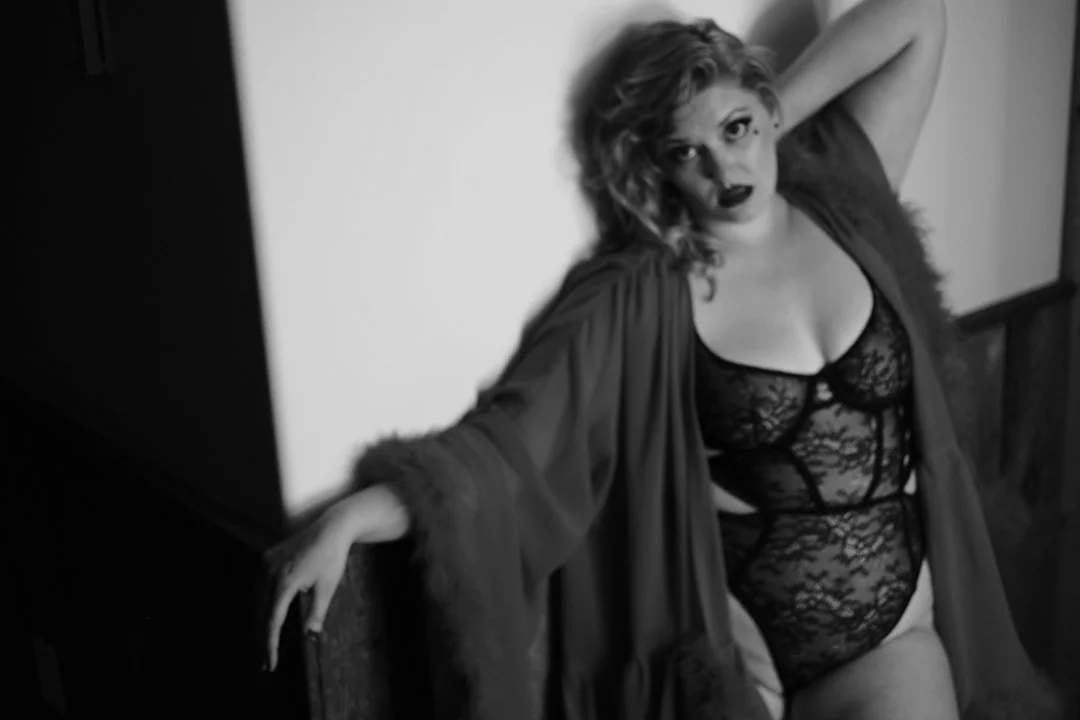
When going through images of a boudoir session with my partner Kiki, she really fell in love with one particular photo (above) that was just barely missed focus. I hated it. It represented failure to me. Kiki, however, really loved it! She enjoyed all the elements of that image and the missed focus softened the photo, giving it a more candid, authentic feel. And I’m all about authenticity in my photography. Her love of that picture and reassurances that not every photo needs to be 100% technically correct or perfect, has completely changed the way I approach my photography and how I decide whether an image gets culled.
Sometimes photography is just about artfully capturing those brief, real, moments. By shooting in MF, people who are viewing my work are seeing exactly what I saw and captured in the moment. It was a split second in time, that I reacted to. I like that it can cause the art that I create to be just a little bit random.
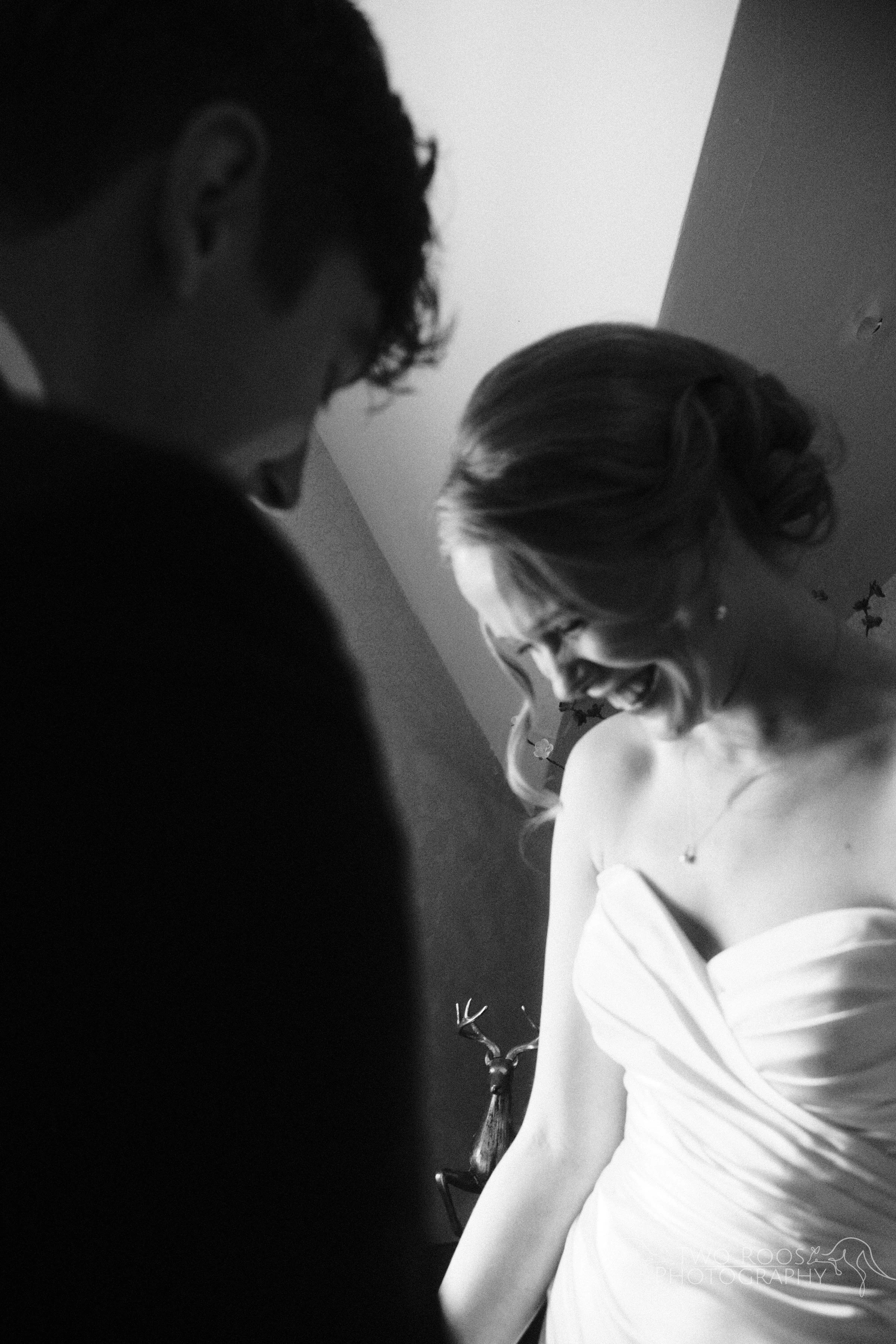
An example of a missed focus shot that I love. This brief moment in time where a lovely couple shared an authentic, giddy smile on their wedding day.
Sometimes due to the nature of the shoot, I’m able to take more time to make sure the elements I want are in focus, or to check and adjust. But sometimes, the moment is over, and I get what I get.
When I shoot in manual focus, my images feel real, raw and more authentically human. I’m engaged with my subject and it is a dance to continually adjust focus as they and myself move around the space we are existing in together.

One of my favourite photos I’ve taken- the leading lines; the colour theory; model is sharp in focus, background is blurred and tells a story, adds context.
Thank you so much for taking the time to read this! I’m looking forward to sharing more of my art through blog posts; I’ll try not to leave it too long next time.
As a thank you, use the following code for a 25% discount on anything bookable through my website, very limited quantity available:
yippee-ki-yay-MF
